By Máté Bikkes | November 17, 2026
Book Feature: The Crafts of Fashion: Temporalities
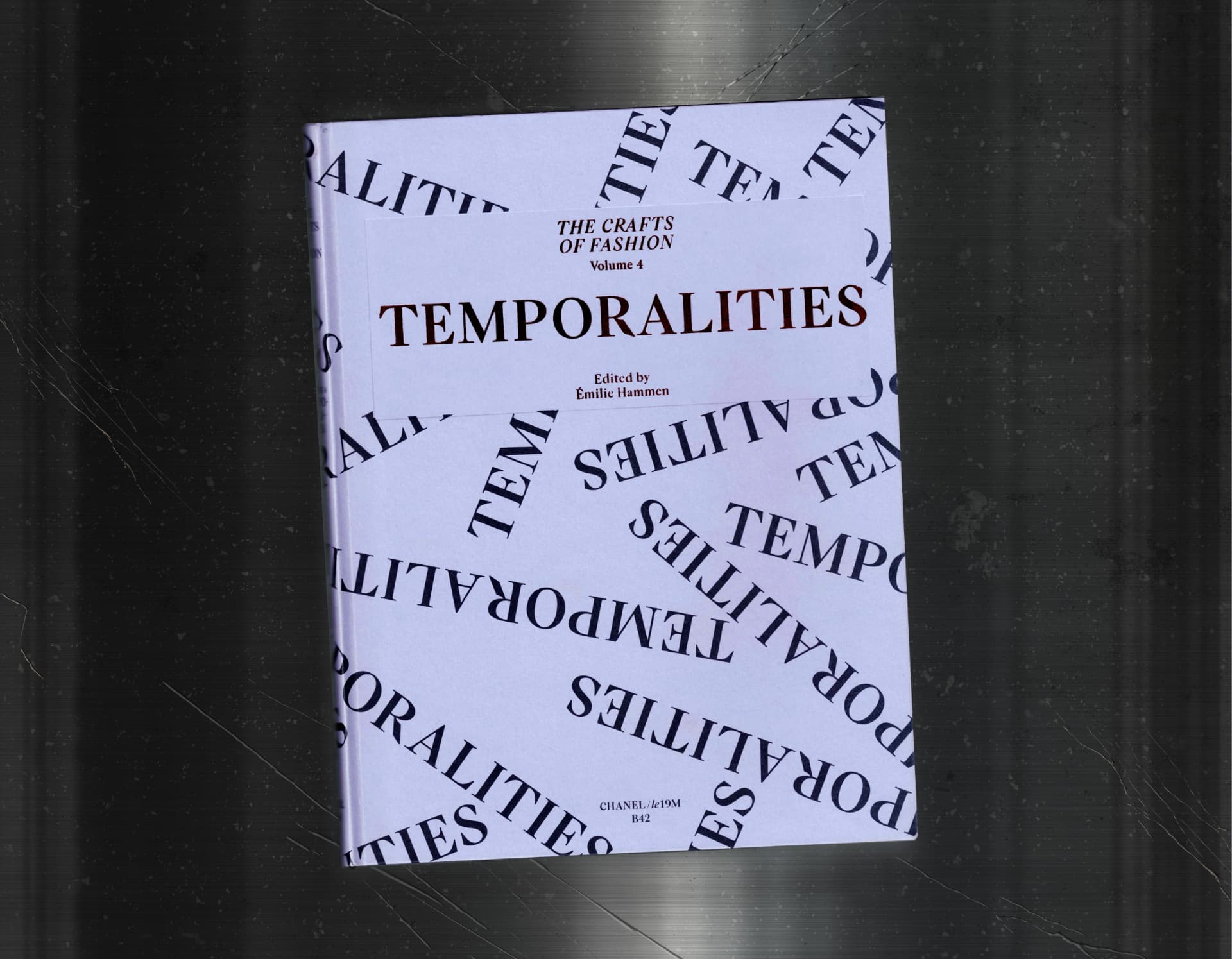
Human Material Loop is featured in The Crafts of Fashion: Temporalities, Volume 4, edited by Émilie Hammen and published by Éditions B42
The Future of Materials Might Be Hidden in Their Past
Fashion has always had a complicated relationship with time. What was once desirable becomes outdated, forgotten techniques are rediscovered, and materials move between cultural relevance and obsolescence. Yet the history of craftsmanship reminds us that innovation does not always require inventing something entirely new. Sometimes, it begins with reconsidering what we have forgotten.
Published in Fall 2026, The Crafts of Fashion: Temporalities, Volume 4 examines how historical knowledge, craftsmanship, restoration, and reconstruction influence contemporary fashion and design. The publication challenges linear understandings of progress by exploring how traditional practices can generate new forms of knowledge and production.
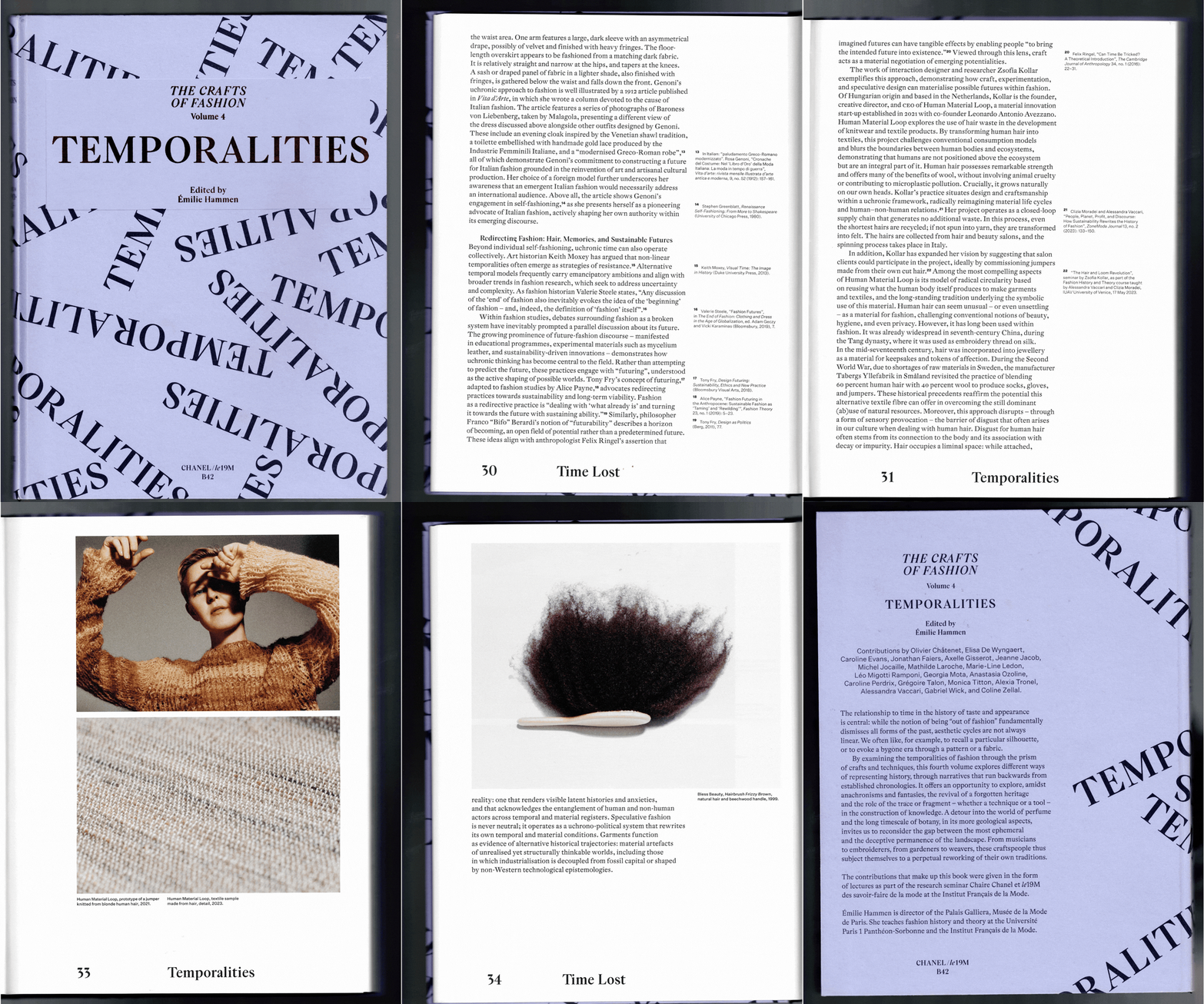
In the chapter Redirecting Fashion: Hair, Memories, and Sustainable Futures, Human Material Loop is discussed through the concept of uchronic thinking, which imagines alternative histories and questions how the present might look if certain developments had taken a different course.
This perspective is particularly relevant to human hair, a material with a long history in textile craftsmanship. Hair has been used in embroidery, jewellery, memorial objects, and garments, yet today it is largely discarded after a haircut. Its physical properties have not fundamentally changed, but our cultural perception of its value has.
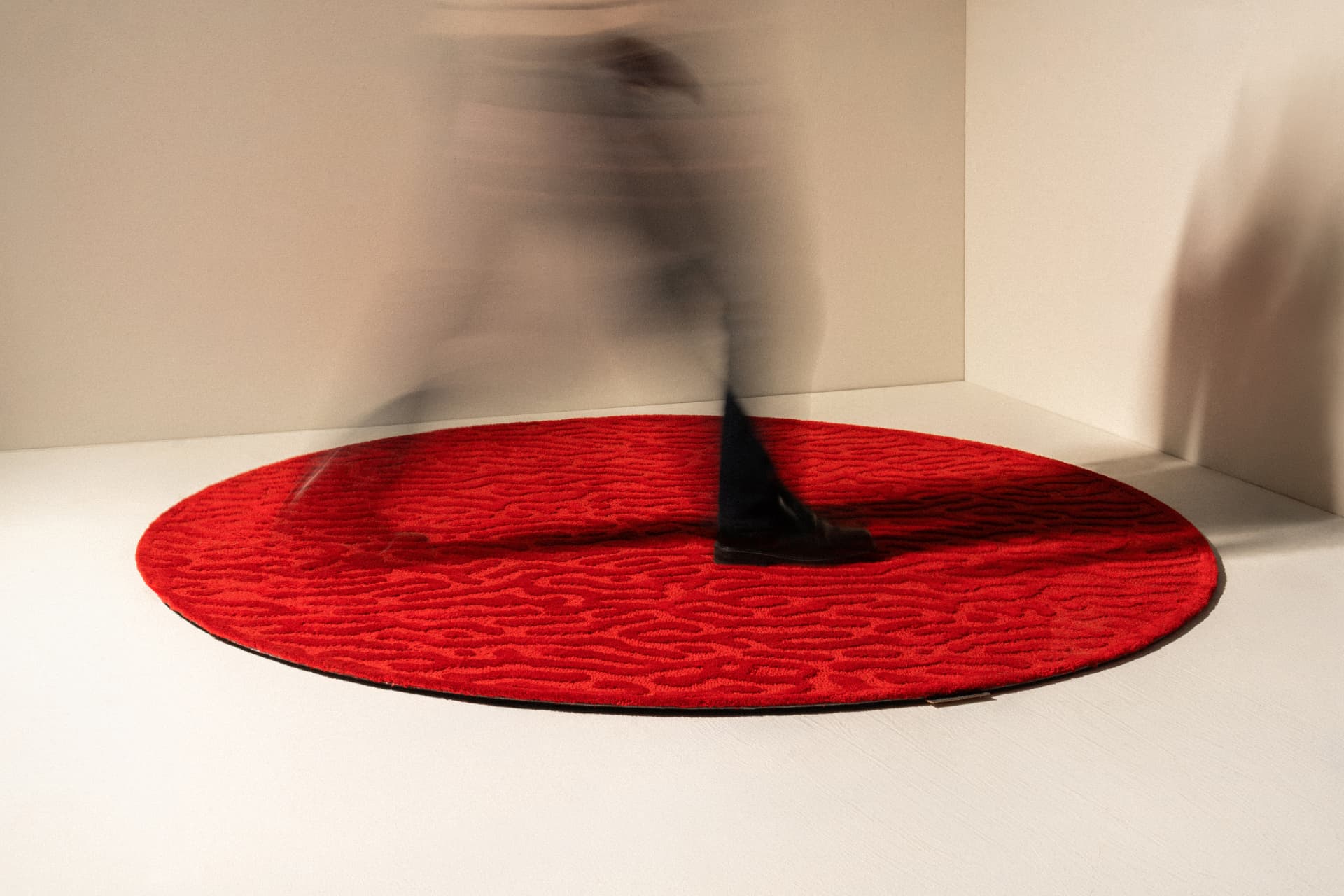
Through ādara®, Human Material Loop is reconsidering this forgotten material history by transforming discarded human hair into engineered keratin fibers for contemporary textile applications. The fibers can be spun into yarns, woven into fabrics, and manufactured into carpets and interior products using existing industrial machinery.
The publication invites us to consider an important distinction between material obsolescence and cultural obsolescence. A material does not necessarily become useless because society stops using it. Its disappearance may instead reflect changes in technology, production systems, or cultural expectations.
By connecting historical craftsmanship with contemporary materials science, the development of ādara® demonstrates how innovation can extend existing material knowledge rather than replace it.
As Human Material Loop founder Zsofia Kollar reflects in the publication, “Sometimes the truth is stranger than fiction.”
About the editor and publisher
The Crafts of Fashion: Temporalities, Volume 4 is edited by Émilie Hammen, a French fashion historian, researcher, and curator who was appointed director of the Palais Galliera, Musée de la Mode de Paris, one of the world's leading institutions dedicated to fashion history and heritage. Her academic and curatorial work explores the relationship between fashion, art, craftsmanship, and the history of ideas, examining how fashion can be understood as a cultural and intellectual practice.
The publication is released by Éditions B42, an independent French publishing house specialising in design, typography, art, and visual culture. Through its publications, Éditions B42 brings together historical research, critical perspectives, and contemporary creative practices, encouraging a deeper understanding of design and its relationship with society.
We would like to thank Émilie Hammen for including Human Material Loop in this exploration of fashion, time, and material culture, and Éditions B42 for bringing these perspectives together in a publication that challenges how we understand craftsmanship, innovation, and the continuity of material knowledge.
Discover The Crafts of Fashion: Temporalities, Volume 4 at Éditions B42