The science of keratin
Keratin has been engineered by nature for millions of years.
It is the structural protein responsible for much of the strength, flexibility and resilience found in hair, wool, feathers, nails and other biological structures.
We are interested in what happens when those properties are approached not as biological curiosities, but as the foundation for industrial materials.
Human Material Loop is building the science and technology to make that possible.
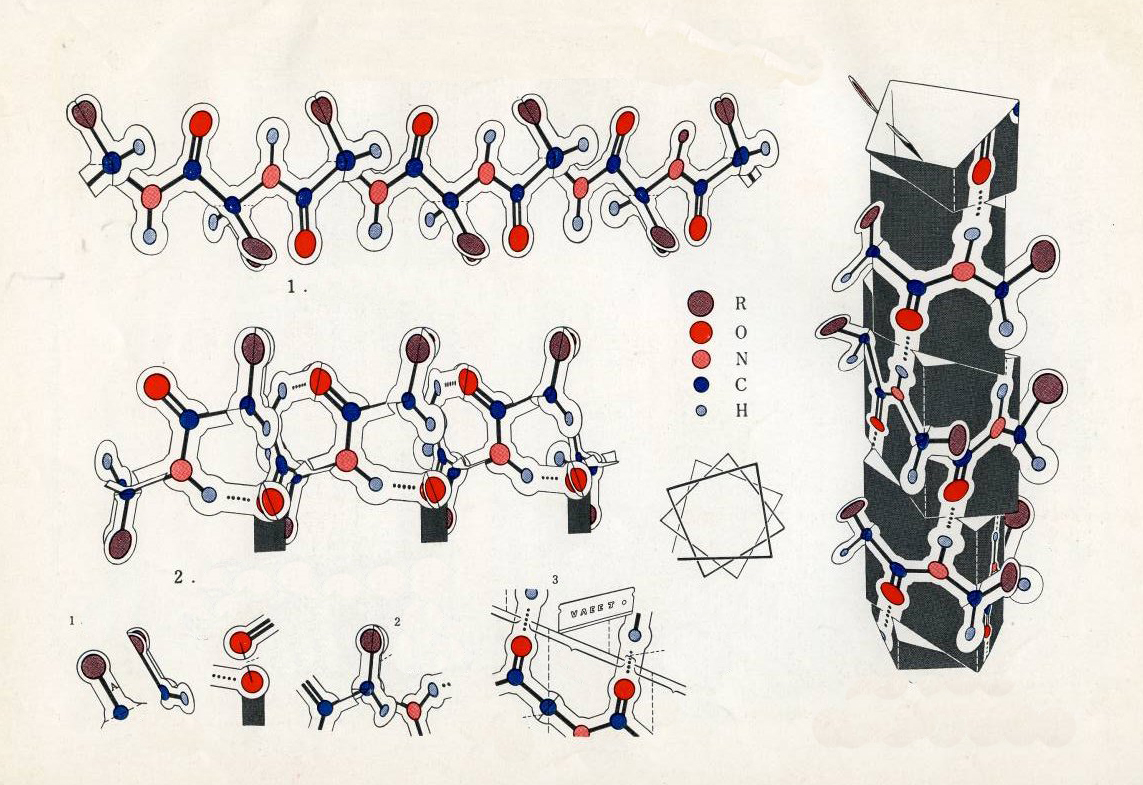
Molecular architecture of the α helix
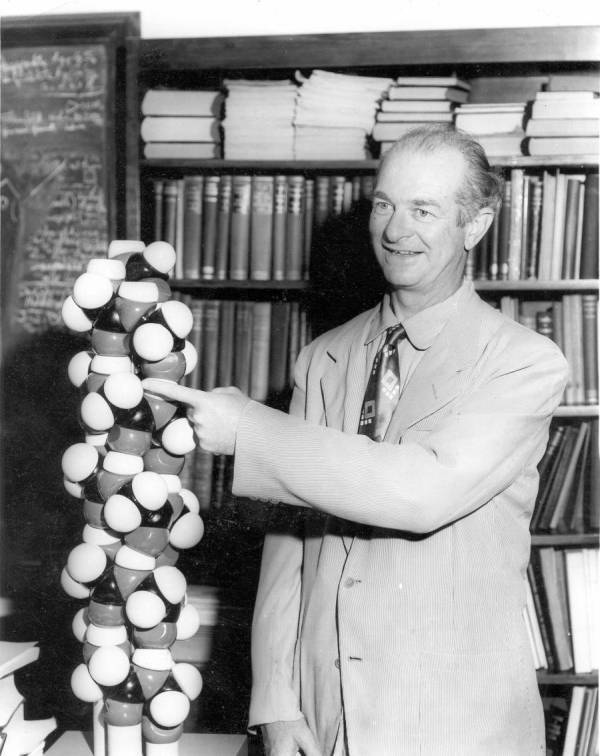
Linus Pauling with a model of the α helix, 1954
Linus Pauling, sometimes described as the “grandfather of protein science,” transformed our understanding of how proteins are built. In 1951, together with Robert Corey and Herman Branson, he proposed the α helix, one of the fundamental structures of proteins. His work soon extended directly to keratin, helping explain the molecular architecture of hair, wool, and other protein fibers.
The 1950s marked an extraordinary period for protein and fiber research. At the same time, synthetic polymers were rapidly emerging and would come to dominate material science and industrial textile development. Research into keratin continued, but its potential as an engineered material received far less industrial attention than synthetic polymers.
Pauling helped establish the molecular foundations of what we know about keratin today. More than seventy years later, there is still much to discover about how this remarkable protein can be understood, processed, and engineered as a material. With new analytical tools, biotechnology, and manufacturing technologies, we can ask questions that Pauling could not answer in his time.
“Keratin has existed for millions of years. What is new is our ability to turn it into an industrial material.”
Definition
What is keratin?
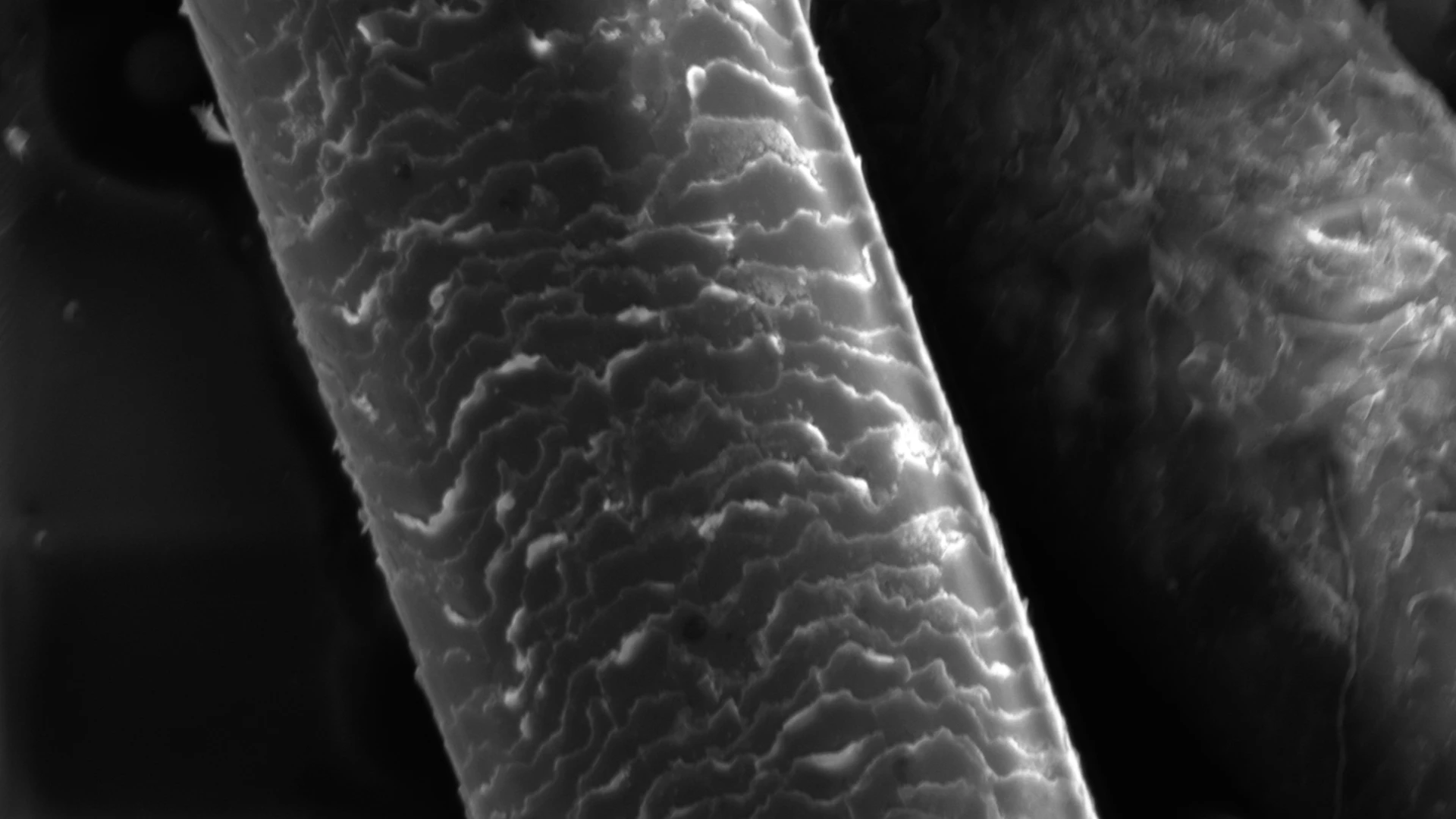
Keratin is a family of fibrous structural proteins and the principal protein component of human hair. It belongs to the intermediate filament protein family, which provides mechanical stability to cells and tissues.
Keratin proteins are composed of polypeptide chains with α helical domains. Pairs of these helices associate into coiled coil structures, which progressively assemble into intermediate filaments within the hair cortex.
The structure is stabilised by hydrogen bonding and hydrophobic interactions, while covalent disulfide bonds between cysteine residues provide additional crosslinking.
This molecular and hierarchical organisation contributes to the high tensile strength, elasticity and structural stability characteristic of human hair.
Structure
Built from the molecular level up
The properties we experience at the scale of a single hair begin much further down. Keratin proteins contain amino acids including cysteine. Cysteine can form disulfide bonds between protein chains, contributing to the stability and mechanical behaviour of keratin structures.
These proteins assemble into progressively larger structures within the fiber.
Research
From biological variation to industrial consistency
Our research focuses on understanding and controlling the properties that determine how keratin rich fibers behave during processing, manufacturing and use.
Each step contributes to the same objective: turning biological variability into predictable material behaviour.
Platform
The fiber is only the beginning
What else can this protein become?
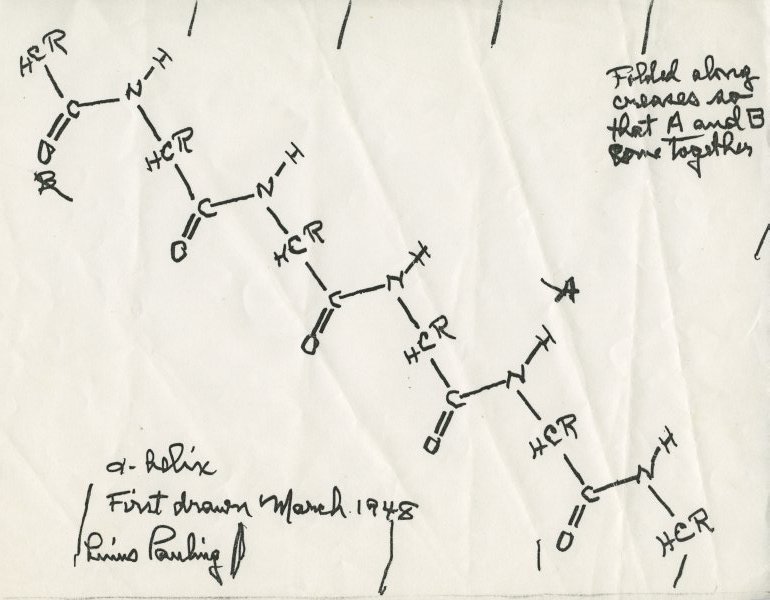
Linus Pauling's first drawing of the α-helix, March 1948
Understanding keratin at fiber level allows us to ask a much larger question. Our first commercial application is ādara®, where our technology transforms human hair waste into a textile fiber suitable for industrial material production.
But textiles represent our starting point, not the boundary of the technology. The scientific knowledge generated through our work contributes to a growing industrial keratin technology platform, opening possibilities for different material formats, processes and applications.
Knowledge
Building the knowledge around industrial keratin
Creating a new material category requires more than developing products. It requires building knowledge.
We work across material science, chemistry, fiber engineering, manufacturing and design to better understand how keratin can be processed, controlled and applied at industrial scale. We also work with universities, research institutions, manufacturers and industry specialists to investigate questions that extend beyond our own laboratory.
There is still much to understand — that is precisely what makes keratin interesting.
Collaboration
What should keratin become next?
We welcome research institutions, scientists, industry associations and companies interested in advancing the science and industrial application of keratin. From fundamental research and characterization to processing technologies, manufacturing and new applications, we are open to research collaborations and knowledge exchange.
Bring us a questionMaastricht University
Industrial research group
Together with Maastricht University, we are building an industrial research group focused on advancing keratin science, technologies and applications.
The group will bring together industry and research to explore how keratin can become a new industrial material platform. If your company or research team would like to be part of it, get in touch.
Get in touch