By Leslie Osterling | September 5, 2025
Why Hair, Why Now
Hair is not just something we shed and throw away. It is a renewable resource, a design material, and a symbol of resilience — the story behind HÆIRLOOM and the Peru Pavilion at the 2025 London Design Biennale.
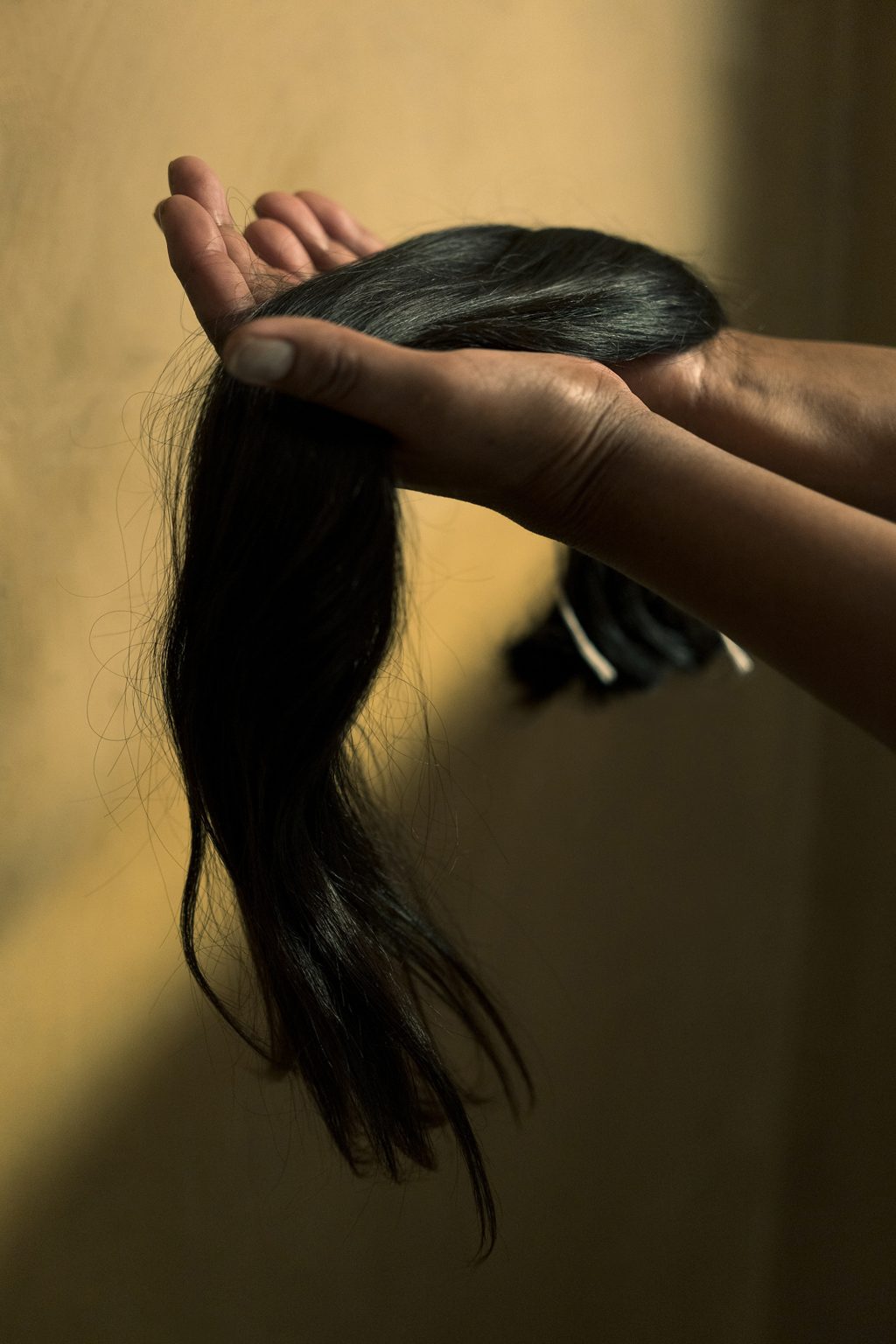
A few years ago, I experienced a period of illness that led to profound introspection. A battle with cancer drew me to support social enterprise CHIQA on a deeply personal level. Losing hair is more than a cosmetic shift — it changes how you see yourself, serving as a daily reminder of vulnerability and resilience.
I was deeply moved when I learned about Kiara Kulisic’s work with Andean women weaving human hair into luxury wigs and hair pieces. The project spoke to me viscerally: I was touched and inspired by these women transforming something often associated with loss or vanity into dignity, empowerment, and livelihood. This connection was the seed for HÆIRLOOM, Ollantaytambo’s (Post) Modern Weavers.
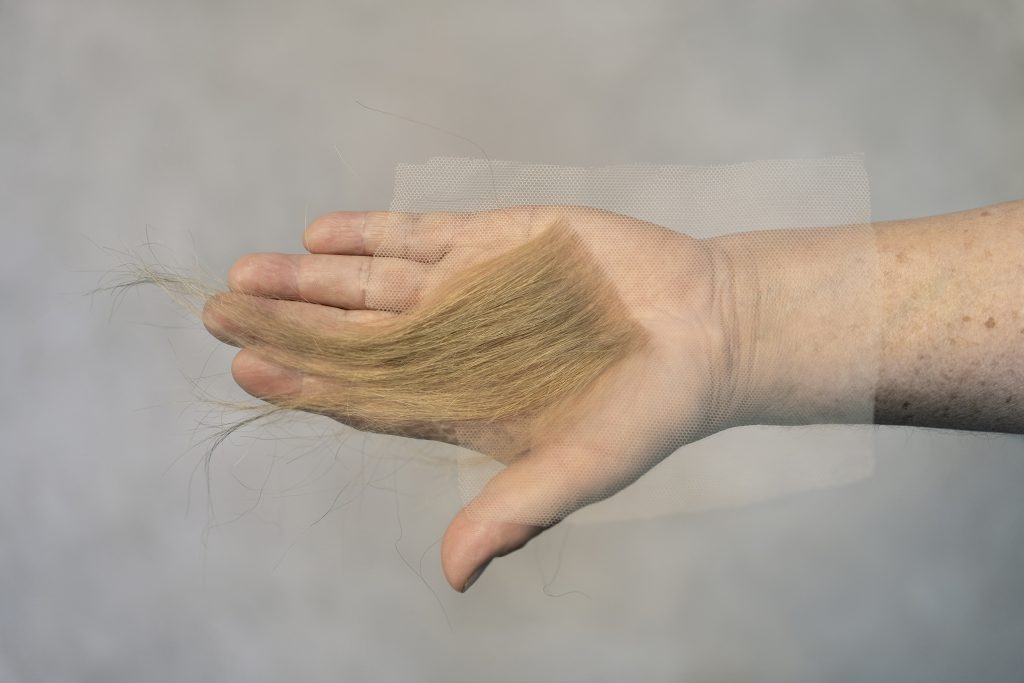
In 2023, I began documenting CHIQA and the female weavers’ work through photography. I travelled to Ollantaytambo to capture their process and their stories. These women are masters of ancestral textile techniques, and they were applying them in a completely new way, intricately weaving individual strands of human hair. The more time I spent with them, the more I saw that this project wasn’t just about wigs, toppers, or hair extensions. It was about reclaiming value, rethinking luxury, and creating opportunities for women in rural Peru to achieve economic autonomy while maintaining their cultural identity.
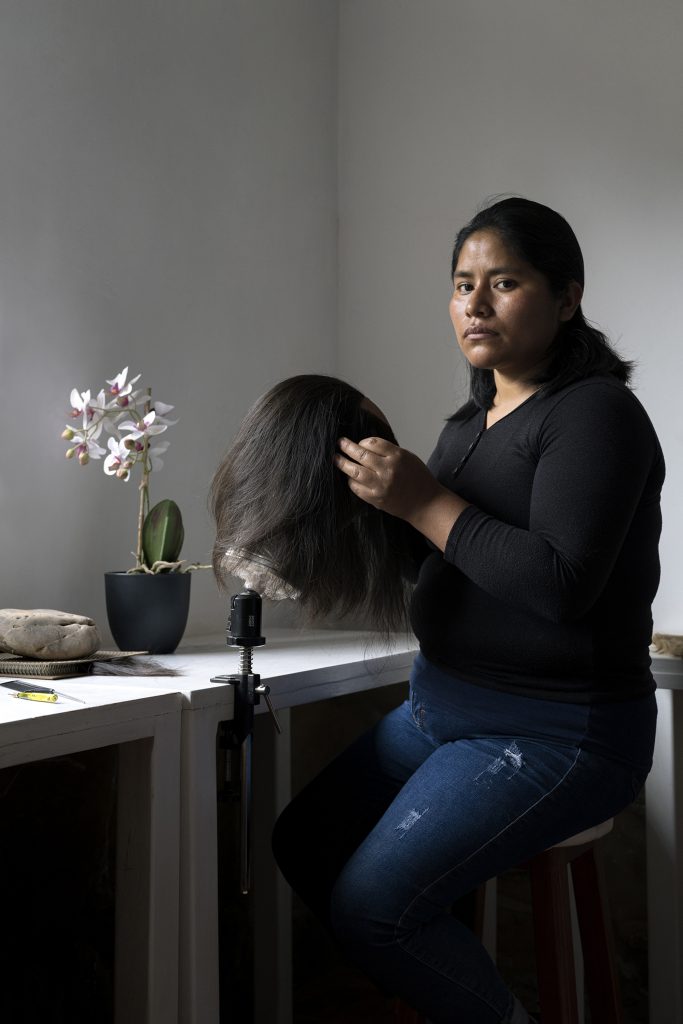
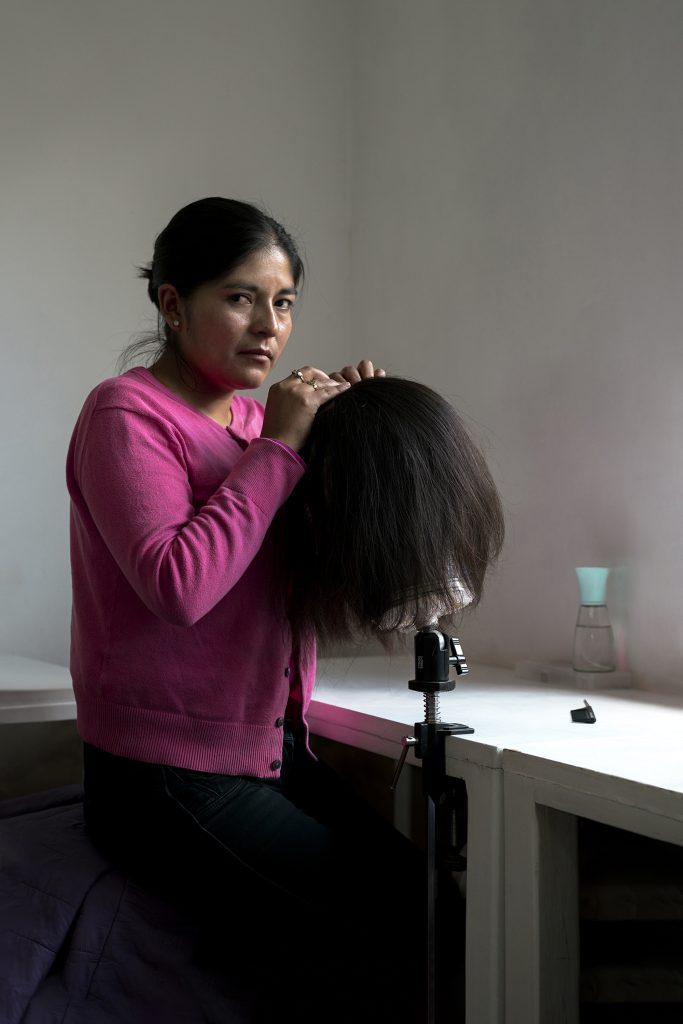
What began as a photographic series then grew into something bigger. Following my 2023 solo exhibition at the Embassy of Peru in London, I was invited to present the work as the Peru Pavilion at the 2025 London Design Biennale — a testament to the weavers’ craftsmanship, creativity, and courage that deserved a global platform.
Alongside CHIQA, and a team of curators, designers, and filmmakers that formed, drawn together by the magnetism of HÆIRLOOM, the project evolved into an immersive exhibition, with photography, film, interactive sessions, and a textile installation made of spun human hair, woven together with alpaca wool and cotton.
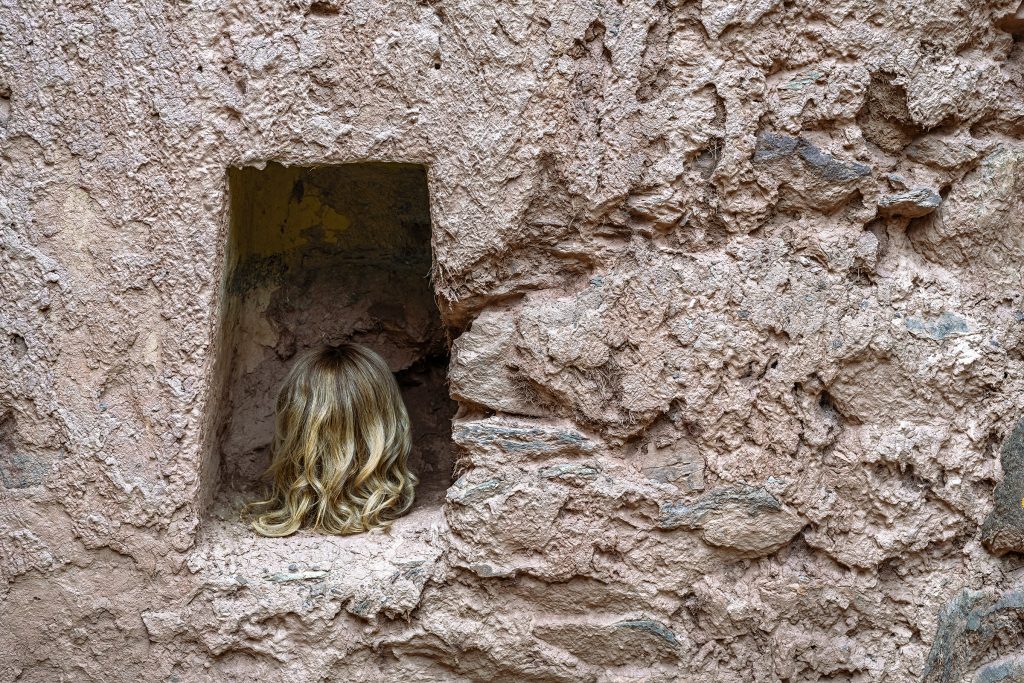
Hair is not just something we shed and throw away, nor is it just an intimate part of who we are. It is a renewable resource, a design material, and a symbol of resilience.
Over time, we naturally became connected with Human Material Loop, an organization dedicated to utilizing human hair as a circular material to reduce waste and pollution. Zsofia Kollar’s research greatly inspired me and very much reinforced what I already believed: there is so much more to hair. Hair is not just something we shed and throw away, nor is it just an intimate part of who we are. It is a renewable resource, a design material, and a symbol of resilience. It can carry memory, identity, and meaning, whilst also becoming furniture, fashion, and art.
Standing in Somerset House, watching London audiences meeting the women captured through my lens, has been an extraordinary and life-defining moment. People were moved, so much so that it earned us one of the four medals awarded to the best Pavilions at the Biennale. Ours was, in my view, the most valuable indeed — the one granted by the public vote.
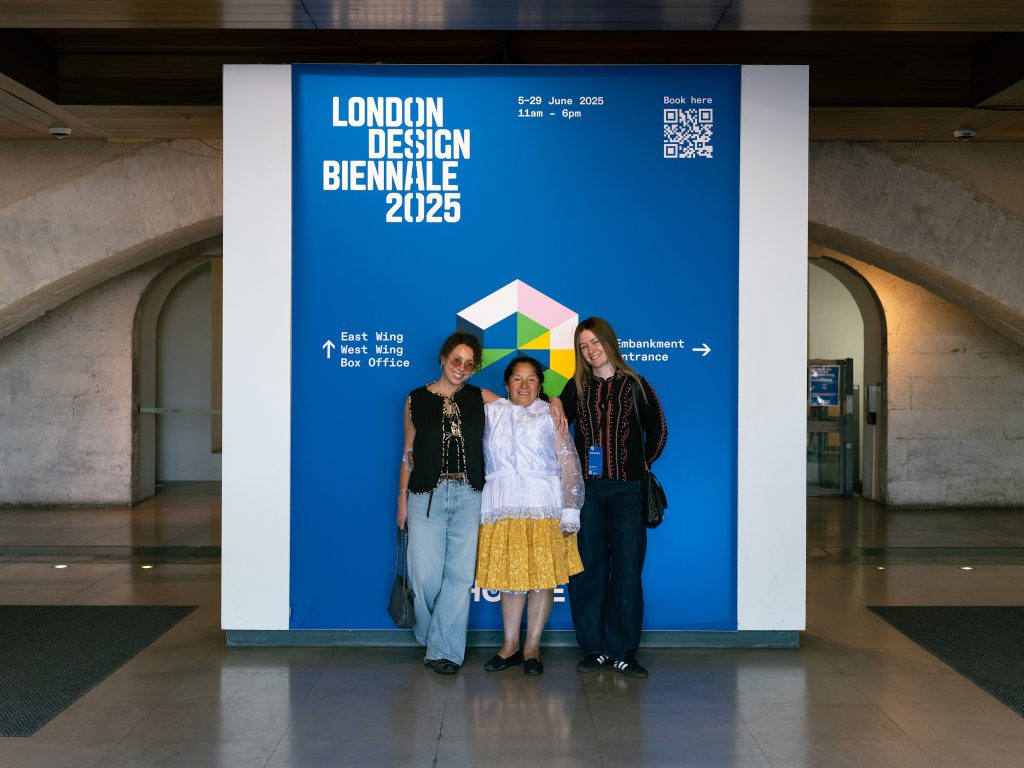
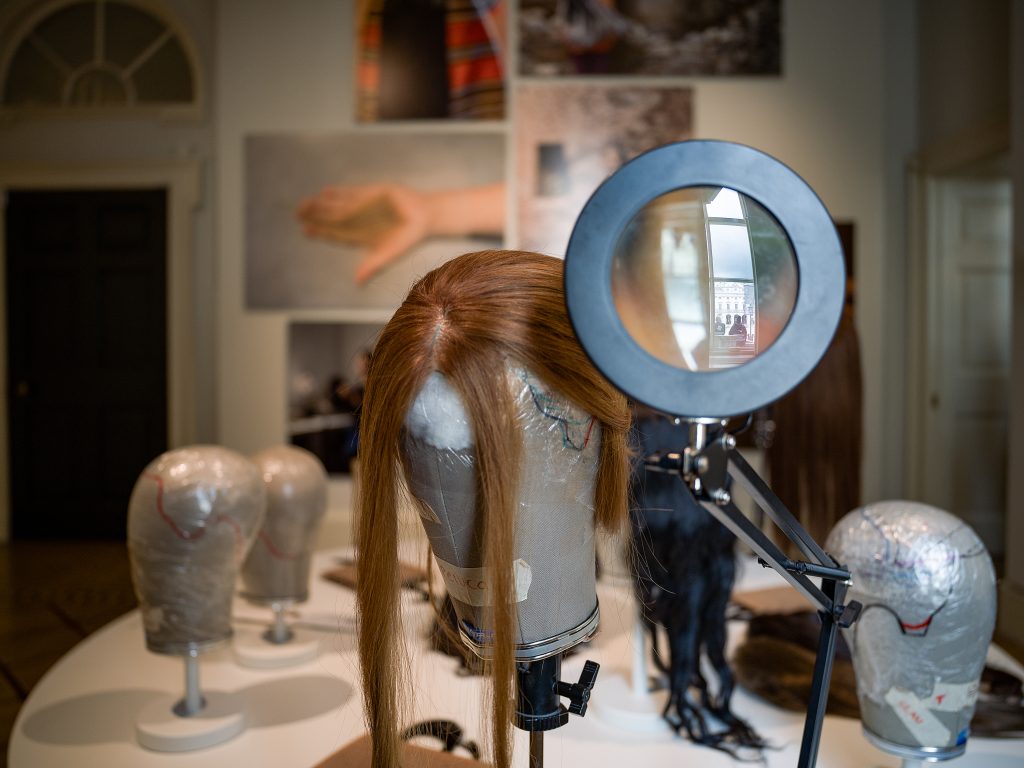
For me, HÆIRLOOM is not just an exhibition. It is a conversation about body, craft, and value. It is about seeing hair in many various dimensions: as a medium for transformation, for empowerment, and for imagining a more sustainable future.
About the author
Leslie Osterling is a Peruvian-British artist and photographer whose work arises from a deep curiosity about life, memory and the passage of time. She studied painting and drawing in Lima and Italy, followed by art history at the Sorbonne in Paris and plastic arts in Lima. She published the photobook Huellas, memoria y tiempo in 2019, and her recent project HÆIRLOOM explores how women in Ollantaytambo’s Sacred Valley use human hair as a renewable and symbolic material.